
Best Wood for Serving Trays: Acacia vs. Beech vs. Rubber Wood vs. Bamboo
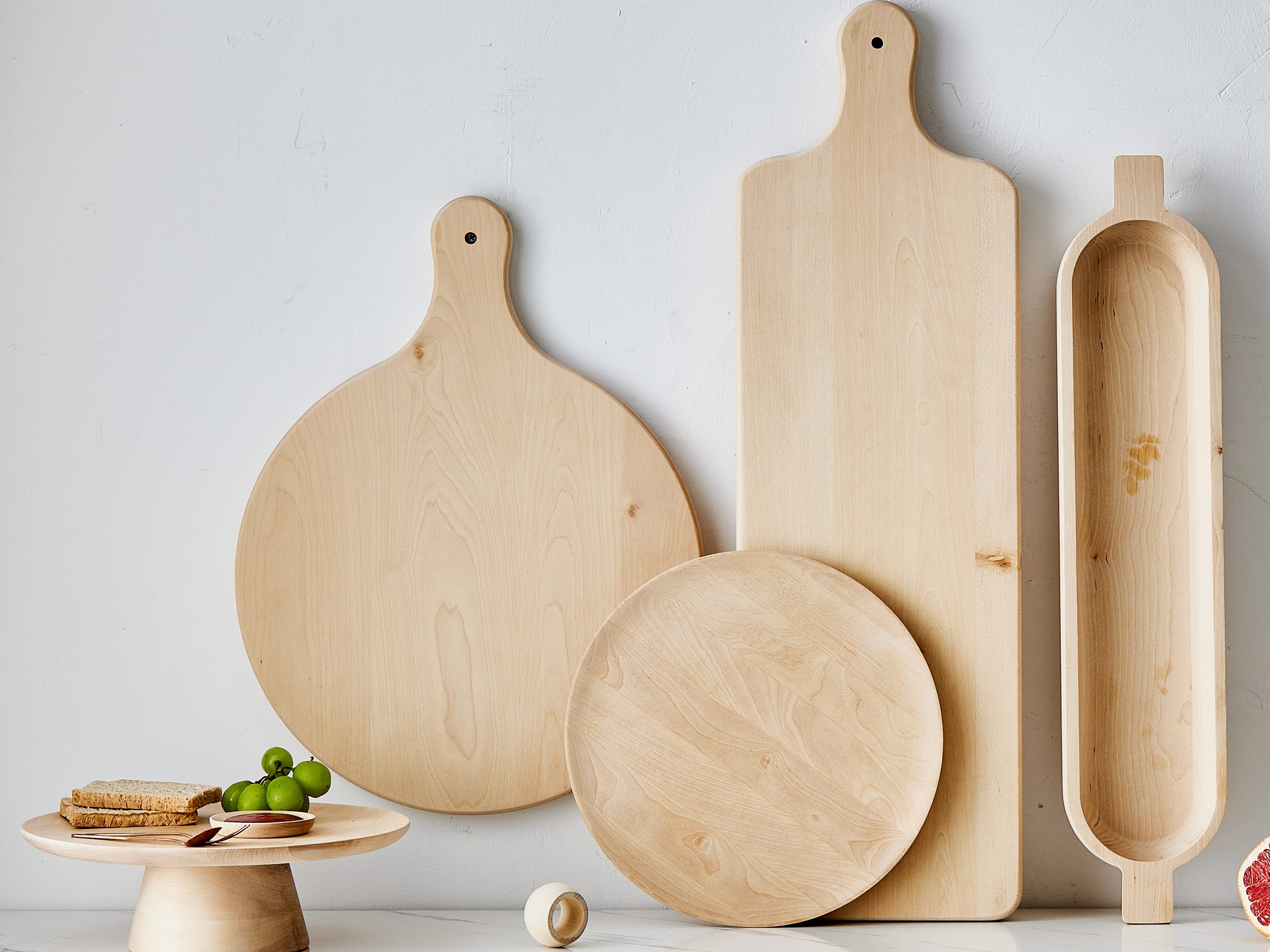
Choosing the right material is one of the most important decisions when developing a wooden serving tray. The material affects more than appearance. It also influences product weight, surface finishing, manufacturing requirements, retail positioning, and overall cost.
For homeware brands, retailers, wholesalers, and private-label businesses, four materials worth comparing are acacia wood, beech wood, rubber wood, and bamboo.
Each offers different characteristics. Acacia is valued for its distinctive grain, beech for its relatively uniform appearance, rubber wood for cost-conscious product development, and bamboo for its lightweight, natural look.
So, what is the best wood for serving trays?
The answer depends on your target market, design concept, expected order volume, and budget. This guide compares the four materials and explains how to choose the right option for your next wooden serving tray project.
1. Acacia Wood: Best for Distinctive Natural Grain
Acacia wood is a popular option for wooden homeware because of its rich color variations and distinctive grain patterns. It can give serving trays a warm, natural appearance that works well in both everyday and premium homeware collections.
Key Characteristics
-
Appearance: Noticeable grain patterns with natural color variation.
-
Design versatility: Suitable for rustic, contemporary, and natural homeware styles.
-
Product positioning: Can work well for mid-range to premium collections, depending on the design and finish.
-
Customization: Can be developed with different shapes, dimensions, edge profiles, finishes, and branding options.
Best Applications
Acacia wood is worth considering for:
-
Wooden serving trays
-
Breakfast trays
-
Decorative tabletop trays
-
Serving boards
-
Entertaining collections
-
Gift sets
-
Private-label homeware
What Buyers Should Consider
Natural grain variation is part of acacia's appeal, but it also means that individual products may not look exactly alike.
For brands that require a consistent visual identity, buyers should confirm acceptable grain and color variation with the manufacturer before mass production.
Acacia is a strong candidate when the appearance of the wood is an important part of the product's value.
2. Beech Wood: Best for a Clean, Consistent Appearance
Beech is a hardwood commonly used in wooden household products. Its relatively uniform appearance makes it suitable for serving trays with a simple, understated design.
Key Characteristics
-
Appearance: Generally light-colored with a comparatively fine, even grain.
-
Design versatility: Suitable for minimalist and contemporary collections.
-
Processing: Can be suitable for shaped edges and other machined details when properly processed.
-
Product positioning: Useful for brands seeking a clean, coordinated wooden product range.
Best Applications
Beech wood can be considered for:
-
Minimalist serving trays
-
Breakfast trays
-
Everyday tabletop products
-
Coordinated kitchenware collections
-
Simple, modern homeware designs
What Buyers Should Consider
Beech is sensitive to moisture conditions, so proper drying, finishing, and storage are important. The final product should be developed and tested for its intended use.
Buyers should also confirm the consistency of color, grain, dimensions, and surface finish across production batches.
Beech is worth considering when you want a light, relatively uniform wood appearance without prominent grain patterns dominating the design.
3. Rubber Wood: Best for Cost-Conscious Product Development
Rubber wood is used in furniture and household products and can be a practical material for commercial wooden homeware projects.
For buyers developing products for mainstream retail or larger-volume orders, it is worth evaluating alongside acacia and beech.
Key Characteristics
-
Appearance: Typically light in color with a relatively subtle grain.
-
Processing: Suitable for many conventional wooden product designs.
-
Product positioning: Can work for everyday homeware and value-oriented collections.
-
Manufacturing considerations: Material grade, drying, machining, finishing, and yield all influence the final cost.
Best Applications
Rubber wood can be considered for:
-
Everyday serving trays
-
Wholesale homeware collections
-
Breakfast trays
-
Multipurpose household trays
-
Retail product ranges
-
Coordinated wooden accessories
What Buyers Should Consider
Rubber wood should not automatically be assumed to be the cheapest option. Actual pricing depends on material specifications, dimensions, construction, finishing, order quantity, and packaging.
For bulk orders, buyers should compare the complete quotation rather than material price alone.
Rubber wood is a practical candidate when you want a straightforward wooden design and need to balance product appearance with target retail pricing.
4. Bamboo: Best for a Lightweight, Natural Look
Bamboo is technically a grass rather than a tree, but it is widely used in kitchenware and homeware manufacturing.
It provides a distinct visual appearance and can be a useful alternative to conventional timber for brands developing natural-material product collections.
Key Characteristics
-
Appearance: Often features a relatively uniform, linear grain pattern.
-
Weight: Can be lightweight, depending on the construction and dimensions.
-
Design versatility: Suitable for contemporary, minimalist, and natural homeware styles.
-
Construction: Products may use laminated bamboo components, depending on the design.
Best Applications
Bamboo can be considered for:
-
Lightweight serving trays
-
Breakfast trays
-
Kitchen organizers
-
Everyday homeware
-
Coordinated bamboo kitchenware collections
-
Natural-material retail ranges
What Buyers Should Consider
Bamboo products can differ significantly depending on the raw material, lamination process, adhesive system, surface treatment, and construction.
Buyers should confirm that the finished product meets the applicable requirements of the destination market, particularly where food-contact use is intended.
Bamboo is a useful option when you want a natural aesthetic that can complement a broader bamboo kitchenware collection.
5. Acacia vs. Beech vs. Rubber Wood vs. Bamboo: Which Should You Choose?
The following comparison provides a practical starting point for product development.
| Buying Factor | Acacia | Beech | Rubber Wood | Bamboo |
|---|---|---|---|---|
| Visual character | Distinctive grain | Relatively uniform | Subtle grain | Linear, natural appearance |
| Typical color | Warm, variable | Light | Light | Light to medium, depending on construction |
| Design direction | Natural, rustic, contemporary | Minimalist, clean | Simple, versatile | Contemporary, natural |
| Cost positioning | Depends on grade and design | Depends on specifications | Often considered for value-oriented projects | Depends on construction and processing |
| Custom design potential | High | High | High | High |
| Main consideration | Natural grain variation | Moisture control | Grade and total manufacturing cost | Construction and bonding quality |
| Potential applications | Premium-looking trays and gifts | Modern tabletop products | Everyday wholesale products | Lightweight-style homeware |
These are general material-selection guidelines, not guarantees of performance or price. Product dimensions, construction, finish, material grade, and manufacturing standards can significantly affect the final result.
6. Which Material Is Best for Different Serving Tray Styles?
The best material also depends on the design of the tray.
Round Wooden Serving Trays
Round trays are often used for tea, coffee, snacks, and decorative serving.
-
Acacia: Suitable when distinctive grain is part of the design.
-
Beech: Suitable for a clean, understated appearance.
-
Rubber wood: Worth considering for straightforward, cost-conscious designs.
-
Bamboo: Suitable for a natural, contemporary look.
Rectangular Wooden Serving Trays
Rectangular trays are versatile for breakfast, drinks, meals, and everyday serving.
All four materials can be considered, depending on the intended use, product dimensions, and target price.
For example, a brand could develop a coordinated range of rectangular trays in different sizes using the same material and finish.
Oval Wooden Serving Trays
Oval trays combine curved edges with an elongated serving surface.
Acacia can emphasize the natural grain, while beech and rubber wood can support simpler visual designs. Bamboo is another option for brands developing a coordinated natural-material collection.
The shape alone does not determine which material is best. Buyers should evaluate the material, dimensions, edge construction, and intended load together.
7. How Material Choice Affects Manufacturing Cost
When developing custom wooden serving trays, the material is only one part of the total cost.
Other important factors include:
Material Grade and Selection
Higher visual consistency requirements may increase material selection and processing requirements.
For natural-grain products, buyers should define acceptable variation before production.
Product Dimensions
Larger trays generally require more material. Thickness and design complexity can also influence material consumption and processing time.
Construction
Solid wood, laminated bamboo, and other constructions involve different production processes.
The appropriate construction depends on the product design and performance requirements.
Surface Finishing
Sanding, oiling, coating, staining, and other finishing processes affect labor and material costs.
The finish should match the intended use and applicable food-contact requirements.
Logo Customization
Laser engraving, printing, and other branding methods may have different setup and production costs.
Packaging
Retail boxes, protective inserts, labels, and customized packaging should be included when comparing quotations.
Order Quantity
Order volume can affect material purchasing, production efficiency, setup costs, and packaging procurement.
For an accurate comparison, ask manufacturers to quote the same specifications across the materials you are considering.
8. How to Choose the Right Material for Your Brand
Before finalizing a serving tray material, answer these five questions.
1. Who Is Your Target Customer?
A premium gift collection may prioritize distinctive grain and visual character. A mass-market retail collection may place more emphasis on target price, consistency, and repeat-order requirements.
2. What Is the Intended Use?
Consider whether the tray will be used for food and drinks, decorative display, breakfast, hospitality, or general organization.
The intended application determines which performance and finishing requirements matter most.
3. What Is Your Target Retail Price?
Work backward from the target retail price to establish a realistic product cost.
Include packaging, shipping, distribution costs, and your required margin rather than evaluating the factory price alone.
4. How Important Is Visual Consistency?
If you need a coordinated product collection, specify the expected color range, grain variation, surface finish, and quality standards.
Requesting a pre-production sample can help establish a clear reference.
5. Will You Need Repeat Orders or Multiple SKUs?
For long-term sourcing, ask the manufacturer about material availability, batch consistency, and how specifications will be maintained for repeat orders.
These considerations can be more important than choosing a material based on appearance alone.
9. OEM and Private Label Wooden Serving Trays
For retailers, importers, and homeware brands, selecting a wood species is only the first step. The next step is developing a product that matches the brand's design and commercial requirements.
An OEM or private-label serving tray project may include customization of the following.
Product Design
-
Round, rectangular, or oval shapes
-
Custom length, width, and thickness
-
Edge profiles
-
Handles or cut-out grips
-
Raised edges
-
Single products or coordinated sets
Material and Finish
-
Acacia wood
-
Beech wood
-
Rubber wood
-
Bamboo
-
Other suitable wood species
-
Natural or stained finishes
-
Surface texture and color requirements
Branding
-
Laser engraving
-
Logo printing
-
Custom artwork
-
Branded labels
Packaging
-
Retail boxes
-
Kraft packaging
-
Product sleeves
-
Customized inserts
-
Private-label packaging
Not every combination is suitable for every design. The final specifications should be confirmed with the manufacturer during sampling and product development.
For a more efficient process, finalize the product dimensions, material, logo placement, finish, and packaging requirements before approving the production sample.
10. What to Ask a Wooden Serving Tray Manufacturer
Before placing an order, use the following checklist to evaluate a potential supplier.
| Question | Why It Matters |
|---|---|
| Which wood species and bamboo materials are available? | Helps identify suitable options for your design and budget. |
| Can you provide material samples? | Allows you to assess color, grain, and surface quality. |
| How do you control moisture and material quality? | Helps reduce risks related to dimensional instability and defects. |
| Can you produce custom shapes and dimensions? | Confirms the manufacturer's product development capabilities. |
| What finishing options are available? | Helps match the product to the intended application. |
| Can you customize logos and packaging? | Supports private-label product development. |
| What is the MOQ for each material and design? | Helps you plan inventory and launch costs. |
| How do you inspect finished products? | Clarifies quality-control expectations. |
| Can the same specifications be maintained for repeat orders? | Supports consistent long-term sourcing. |
| What information is needed for an accurate quotation? | Reduces delays during the RFQ process. |
A reliable manufacturer should be able to explain the advantages and limitations of each material and recommend options based on your actual requirements.
11. Why Choose NHTY for Wooden Serving Tray Manufacturing?
Ningbo Tian Yi Natural Homeware Co., Ltd. (NHTY) is a China-based manufacturer specializing in bamboo and wooden kitchenware and homeware.
Established in 2008, NHTY operates a 4,000㎡ factory and a 1,200㎡ showroom featuring more than 3,500 products. The company's material range includes acacia, beech, rubber wood, bamboo, walnut, oak, ash, olive wood, and maple.
For buyers developing wooden serving trays, NHTY offers a broader product portfolio that can support coordinated kitchenware and homeware sourcing.
Potential project requirements include:
-
Wooden serving trays in different shapes and sizes
-
Material selection for different product positions
-
Logo engraving, laser branding, and printing options where available
-
Custom product development
-
Private-label packaging
-
Sampling and bulk production
-
Related wooden kitchenware and tabletop products
NHTY also lists FSC, BSCI, ISO9001, and ISO14001 certifications in its company information.
For brands seeking a long-term manufacturing partner, the ability to source several related products through one supplier can simplify product development and collection planning.
Explore the NHTY wooden homeware range or learn more about the company on the About Us page.
12. Building a Coordinated Wooden Tabletop Collection
A serving tray can be the starting point for a larger tabletop collection.
For example, a brand could develop a coordinated range featuring:
-
Wooden serving trays
-
Wooden serving boards
-
Wooden bowls
-
Wooden salad servers
-
Wooden coasters
-
Wooden cake stands
The collection can use consistent materials, finishes, branding, and packaging to create a recognizable visual identity.
Different wood species can also serve different product positions within the same range. For example, a brand might use acacia for visually distinctive serving pieces and beech or rubber wood for simpler everyday products, subject to product testing and cost evaluation.
For retailers and private-label businesses, this approach creates opportunities to expand the assortment without treating each product as an entirely separate project.
Frequently Asked Questions
What is the best wood for serving trays?
The best wood depends on your design, target price, intended application, and brand positioning. Acacia is worth considering for distinctive grain, beech for a relatively uniform appearance, rubber wood for cost-conscious product development, and bamboo for a lightweight, natural look.
Is acacia wood good for serving trays?
Yes. Acacia can be a suitable choice for serving trays because of its natural grain and warm appearance. Buyers should specify acceptable color and grain variation when consistent product appearance is important.
Is beech wood suitable for serving trays?
Beech can be suitable for serving trays with a clean, relatively uniform appearance. Proper drying, finishing, and moisture management are important during manufacturing and use.
Is rubber wood a good choice for wholesale serving trays?
Rubber wood can be considered for wholesale serving trays, particularly when buyers need a straightforward design and a controlled target cost. Actual suitability and pricing depend on material grade, dimensions, finishing, order quantity, and packaging.
Are bamboo serving trays better than wooden trays?
Neither material is universally better. Bamboo can offer a different grain appearance and construction approach, while conventional wood species provide a wider range of natural grain and color characteristics. The best option depends on the intended use, design, budget, and product requirements.
Which wood is best for premium serving trays?
Acacia and walnut may be suitable for premium-looking collections because of their distinctive natural appearance. However, premium positioning also depends on design, finishing, construction, branding, and packaging.
Can I customize wooden serving trays with my logo?
Depending on the product and manufacturing process, customization may include laser engraving, logo printing, product dimensions, shape, surface finish, and private-label packaging. Confirm the available options with the manufacturer.
What should I include in a wooden serving tray RFQ?
Include the material, shape, dimensions, thickness, finish, logo requirements, packaging, estimated order quantity, target market, and delivery requirements. If you are comparing several materials, request quotations based on equivalent specifications.
Can one manufacturer supply multiple wooden homeware products?
Some manufacturers offer several related categories, allowing buyers to develop coordinated collections. Check the supplier's actual product range, customization capabilities, quality systems, and production capacity before placing an order.
Conclusion
Choosing the best wood for serving trays requires balancing appearance, functionality, manufacturing requirements, and cost.
-
Acacia wood is worth considering when natural grain and visual character are priorities.
-
Beech wood can suit clean, relatively uniform designs.
-
Rubber wood can be practical for cost-conscious, everyday homeware.
-
Bamboo can work well for lightweight-style products and coordinated natural-material collections.
The best choice is the one that fits your product concept, target customer, quality requirements, and commercial goals.
For brands developing custom wooden serving trays, comparing material samples and quotations from a capable manufacturer is an important step before committing to mass production.
NHTY supports bamboo and wooden homeware sourcing, product customization, and manufacturing for international buyers. Contact NHTY to discuss your wooden serving tray requirements and develop a product that fits your brand.
What Certifications Are Required for Wooden Kitchenware?
Wooden Serving Tray Shapes: Round vs. Rectangular vs. Oval — Which Shape Is Right for Your Brand?
Related Article



