
7-Beech Wood
2022-11-29

Color/Appearance: Beech is typically a pale cream color, sometimes with a pink or brown hue. Veneer tends to be slightly darker colored, as slicing the veneer usually requires the wood to be prepared with steam, which gives the wood a more golden tone. Flatsawn surfaces tend to be very plain, while quartersawn surfaces exhibit a silvery fleck pattern.
Grain/Texture: Grain is straight, with a fine to medium uniform texture. Moderate natural luster.
Rot Resistance: Beech is considered non-durable or perishable; it is also susceptible to insect attack.
Workability: Overall good workability; it machines well, and glues, finishes, and turns well. Beech also responds superbly to steam-bending. It does, however, have a large amount of movement in service, so movement and wood stability must be taken into account.
Odor: No characteristic odor.
Allergies/Toxicity: Although severe reactions are quite uncommon, European Beech has been reported as been reported as a sensitizer. Usually most common reactions simply include eye, skin, and respiratory irritation. See the articles Wood Allergies and Toxicity and Wood Dust Safety for more information.
Pricing/Availability: European Beech is widely available across Europe, and it very economically priced within its natural range.
Sustainability: This wood species is not listed in the CITES Appendices or on the IUCN Red List of Threatened Species.
Common Uses: Lumber, veneer, flooring, boatbuilding, furniture, cabinetry, musical instruments (piano pinblocks), plywood, and turned objects.
Comments: Beech is an important and widely-used hardwood in Europe. Its hardness, wear-resistance, strength, and excellent bending capabilities—coupled with its low price—make this hardwood a mainstay for many European woodworkers. Depending on soil conditions, European Beech can grow to very large sizes, and wide, long lumber is commonly available for use.


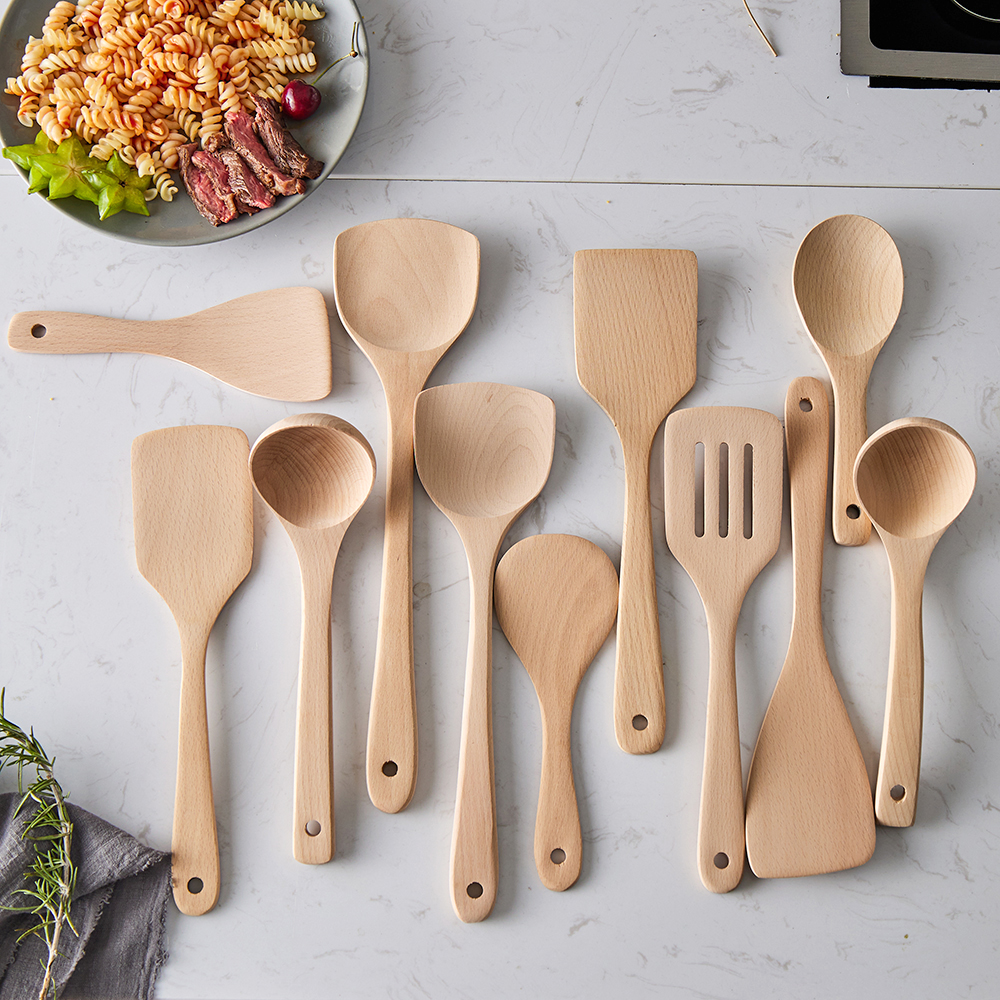


8-Acacia Wood
6-Cherry Wood
Related Article

Compare acacia, beech, rubber wood, and bamboo for serving trays. Learn how to choose the right material for your brand, wholesale orders, and custom OEM projects.
What Wood Is Best for Serving Trays? A Guide to Acacia, Beech, Rubber Wood and Bamboo

Compare acacia wood and bamboo for wooden kitchenware. Learn their differences in durability, appearance, sustainability, and sourcing options for your brand.
Acacia Wood vs Bamboo: Which Material Is Better for Wooden Kitchenware?

The type of wood affects not only the appearance of the final product but also its durability, cost, sustainability, and market positioning.
For companies sourcing wooden home products, working with an experienced wooden homeware manufacturer can help select the most suitable materials based on product requirements and target customers.
This guide explains the characteristics of popular wood materials and how buyers can choose the best option for their custom wooden products.
For companies sourcing wooden home products, working with an experienced wooden homeware manufacturer can help select the most suitable materials based on product requirements and target customers.
This guide explains the characteristics of popular wood materials and how buyers can choose the best option for their custom wooden products.
How to Choose the Best Wood for Custom Homeware Products: A Complete Guide for Global Buyers
